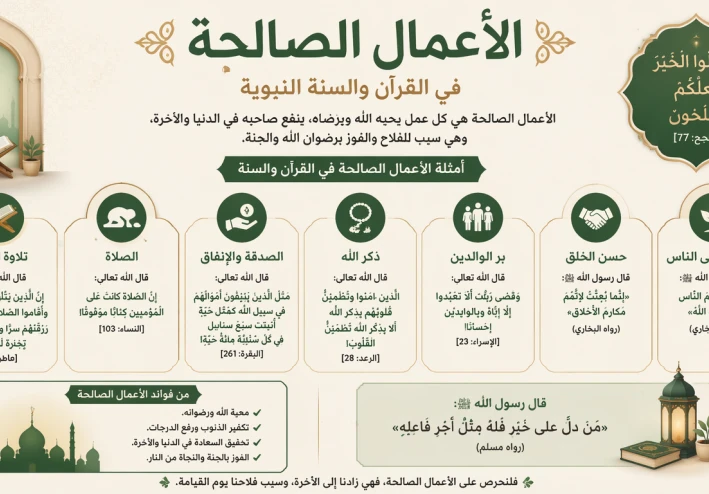
الأعمال الصالحة في القرآن الكريم و السنة النبوية
Good Deeds
In the name of God ALLAH , the Most Gracious, the Most Merciful.
Peace and blessings be upon the Seal of the Prophets and Messengers, Muhammad (peace and blessings be upon him), and upon his family and all his companions, and upon those who follow them in righteousness until the Day of Judgment.
Good deeds are every word, action, or intention that God Almighty loves and is pleased with, and which a Muslim performs seeking God's pleasure and to attain reward and recompense. Islam encourages performing good deeds, making them a means to success in this life and the hereafter.
The Holy Quran contains numerous verses that urge righteous actions, including: “Indeed, those who believe and do righteous deeds will have Gardens of Bliss” (Quran 26:129), and “Whoever does righteousness, whether male or female, while being a believer - We will surely cause him to live a good life” (Quran 16:97). These verses indicate that faith and righteous deeds are the foundation of success and happiness.
Righteous deeds encompass both outward and inward acts of worship, as well as treating people kindly and showing them compassion. They are not limited to acts of worship alone, but include every beneficial action performed with the intention of pleasing God.
The Importance of Good Deeds
Good deeds hold a high position in Islam, as they are evidence of true faith and a means of attaining God's love and pleasure. They also elevate the believer's status, expiate sins, and bring blessings and goodness to life.
Among the fruits of good deeds is that they grant the doer tranquility and peace of mind, make them beloved among people, and increase the cohesion of society and the spread of goodness within it.
Types of Good Deeds
First: Acts of Worship
Maintaining the five daily prayers.
Reading and reflecting upon the Holy Quran.
Fasting.
Giving Zakat (obligatory charity) and Sadaqah (voluntary charity).
Performing Hajj and Umrah (pilgrimage) for those who are able.
Remembrance of God, supplication, and seeking forgiveness.
Second: Kindness to Parents
Kindness to parents is considered one of the greatest good deeds. It includes obeying them in what is right, treating them kindly, showing them humility, and praying for them.
Third: Maintaining Kinship Ties
Islam encourages visiting relatives, being kind to them, inquiring about their well-being, and helping them when needed.
Fourth: Kindness to People
Helping the needy.
Relief for the distressed.
Fulfilling people's needs.
Kind words.
Smiling at others.
Fifth: Good Character
Among the righteous deeds are:
Truthfulness.
Trustworthiness.
Fulfilling promises.
Humility.
Patience.
Forgiveness and tolerance.
Sixth: Seeking Beneficial Knowledge
Seeking and teaching knowledge to others are deeds whose reward continues and from which society benefits.
Seventh: Kindness to the Environment and Animals
Islam encourages compassion towards animals, maintaining cleanliness, and refraining from causing harm on Earth.
Conditions for the Acceptance of Righteous Deeds
For a righteous deed to be accepted by God Almighty, it is essential to:
Be sincere to God Almighty, without any intention of showing off or seeking praise.
Follow the example of the Prophet (peace and blessings be upon him), ensuring the deed conforms to the Quran and Sunnah.
Effects of Righteous Deeds
Attaining God's pleasure.
Entering Paradise and attaining success in the Hereafter. Increased blessings in life and sustenance.
Peace of heart and tranquility of soul.
Love and respect from others.
Strengthening of social bonds.
Conclusion
In conclusion, righteous deeds are the path to God's pleasure and human happiness in this life and the hereafter. They are not limited to acts of worship alone, but encompass every beneficial action performed by a Muslim with sincerity and truthfulness. Therefore, the believer should strive to seize opportunities for acts of obedience and good deeds, and fill their life with righteous actions that benefit both themselves and their community, hoping for God's mercy and His great reward.