

In this article
The Pillars of Faith and the Pillars of Islam
In the name of God ALLAH , the Most Gracious, the Most Merciful.
Peace and blessings be upon the Seal of the Prophets and Messengers, Muhammad (peace and blessings be upon him), and upon his family and all his companions, and upon those who follow them in righteousness until the Day of Judgment.
Islam is a comprehensive religion based on clear and integrated foundations that aim to regulate the relationship between humankind and its Lord, with itself, and with its community. Among the most important of these foundations are the Pillars of Islam and the Pillars of Faith. These pillars represent the basis upon which the Islamic religion is built, and a Muslim's faith is not complete without believing in them and acting accordingly.
First: The Pillars of Faith:
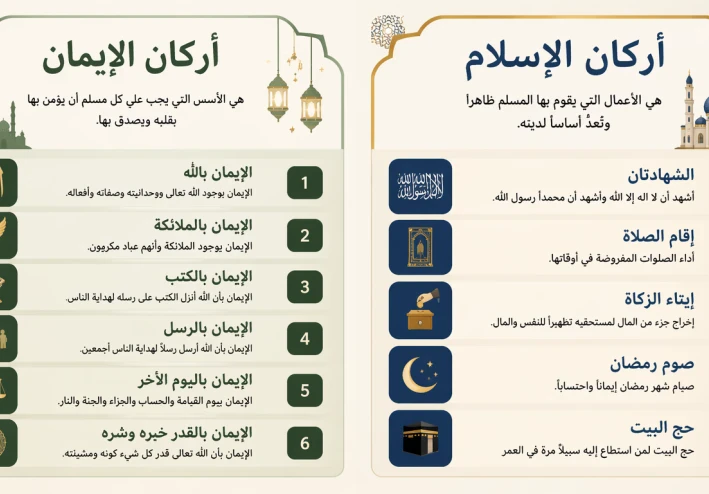
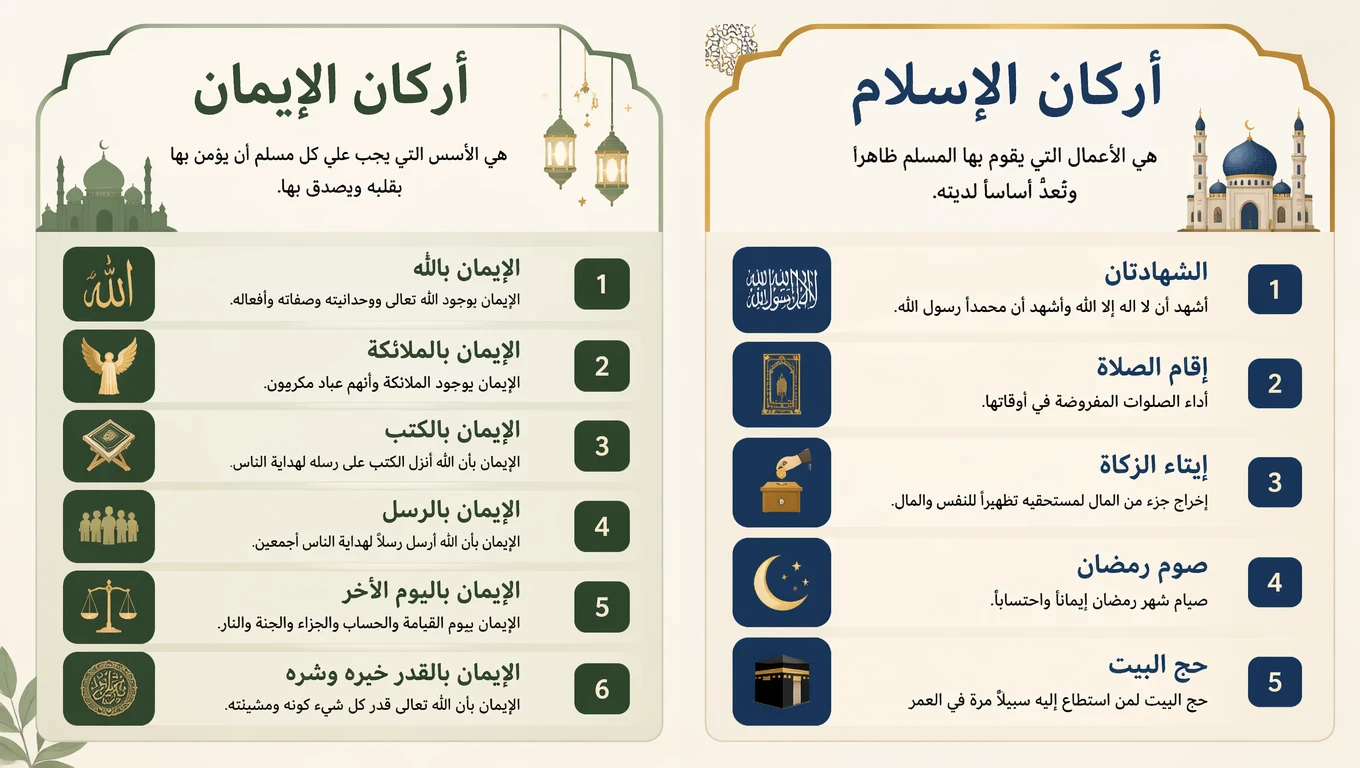
The Pillars of Faith are the heartfelt beliefs held by Muslims. There are six pillars:
Belief in God: This means believing in His existence, His Oneness, His attributes, His Most Beautiful Names, and that He is the Creator and Sustainer of all things.
Belief in Angels: These are beings created by God from light, who obey Him and carry out His commands without disobedience.
Belief in the Divine Scriptures: Such as the Holy Quran, the Torah, and the Gospel, and believing that they were revealed by God.
Belief in the Messengers: These are the prophets whom God sent to guide humanity, including Noah, Abraham, Moses, Jesus, and Muhammad (peace be upon them all).
Belief in the Last Day: This is belief in the Resurrection, the Reckoning, Paradise, and Hell, and that every person will be held accountable for their deeds.
Belief in Divine Decree, both good and bad: This means believing that everything that happens in the universe is by God's decree, knowledge, and wisdom.
Secondly: The Pillars of Islam:
The pillars of Islam are the outward actions performed by a Muslim. They are five fundamental pillars brought by the Prophet Muhammad (peace and blessings be upon him):
1- The Two Testimonies of Faith: These are the testimony that there is no god but God and that Muhammad is the Messenger of God. They are the foundation for entering Islam and signify acknowledging the Oneness of God and following the Sunnah (practices) of the Prophet (peace and blessings be upon him).
2- Establishing Prayer: This is the second pillar of Islam. It is the direct connection between the servant and his Lord and is performed five times a day. It purifies the soul and prevents immorality and wrongdoing. 3- Giving Zakat: This is giving a portion of one's wealth to the poor and needy. It is a means of achieving social solidarity and reducing poverty in society.
4- Fasting Ramadan: This is abstaining from food, drink, and desires from dawn until sunset. It aims to purify the soul and strengthen piety and patience.
5- Hajj (Pilgrimage) to the House (Kaaba) for those who are able: This is the fifth pillar of Islam. It is performed in Mecca for those who have the financial and physical means, and it unites Muslims from all over the world in a single act of worship.
The pillars of faith are well-known. As for the five pillars of Islam—the two testimonies of faith, establishing prayer, giving Zakat, fasting Ramadan, and performing Hajj for those who are able—these are the great acts through which a Muslim practically demonstrates their faith. They contribute to purifying the soul, strengthening the relationship with God Almighty, and developing a spirit of responsibility and cooperation among members of society.
*The pillars of faith and the pillars of Islam are closely linked. Faith is the foundation upon which actions are built, and righteous actions are the fruit that demonstrates the sincerity of faith. The more a Muslim's faith increases, the more eager he becomes to perform acts of obedience and good deeds, and the more he adheres to the pillars of Islam, the stronger and more steadfast his faith becomes.
Keep up with عمر عبدالله
Choose site notifications, email, or both. Guests can subscribe by email without an account.
Report this article
Tell our review team about a problem with this content. Your details will not be shown to the author or other readers.
Your report could not be sent. Please try again later.
Sign in to report an article
Discussion
comments (0)
Share a perspective. Start a thoughtful conversation.
please login to be able to comment